
New Jersey Obituary and Death Records
New Jersey obituary and death records help families, researchers, and legal professionals find information about deceased individuals across the state. The Office of Vital Statistics and Registry in Trenton holds death records dating back to 1951. The New Jersey State Archives stores older death records from 1848 through 1963 on microfilm. You can search for obituary records by name, date, or location. Municipal registrars in all 21 counties also keep local death certificates. Whether you need a certified copy for legal use or a genealogy copy for family research, New Jersey provides several paths to access these vital records.
New Jersey Death Records Quick Facts
Where to Find New Jersey Obituary Records
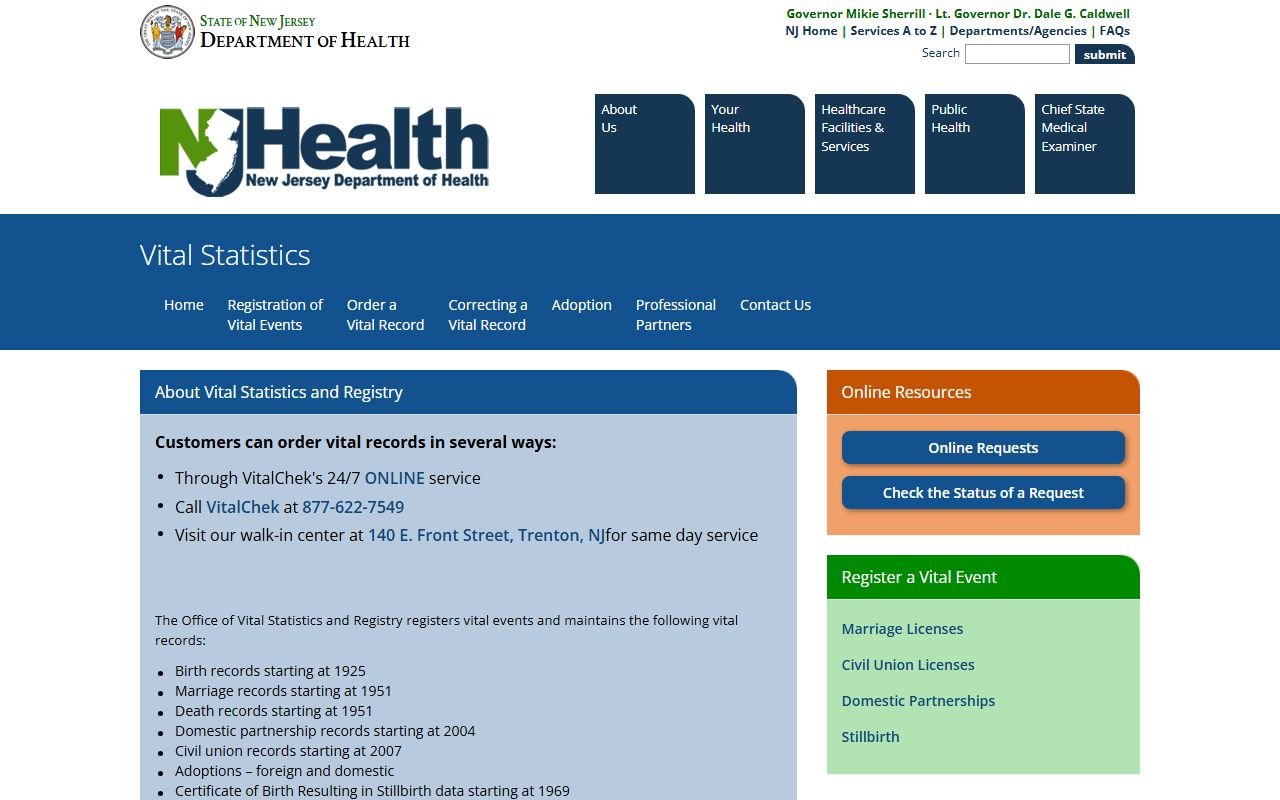
Death records in New Jersey come from two main sources. The Office of Vital Statistics and Registry registers all vital events and keeps death records from 1951 to the present. This office is the state repository for the official record of death. Each record lists the name of the deceased, the date and cause of death, and the location where it took place. The office sits at 140 E. Front Street in Trenton. Walk-in service is offered for same day requests. You can also call VitalChek at 877-622-7549 to order by phone at any time.
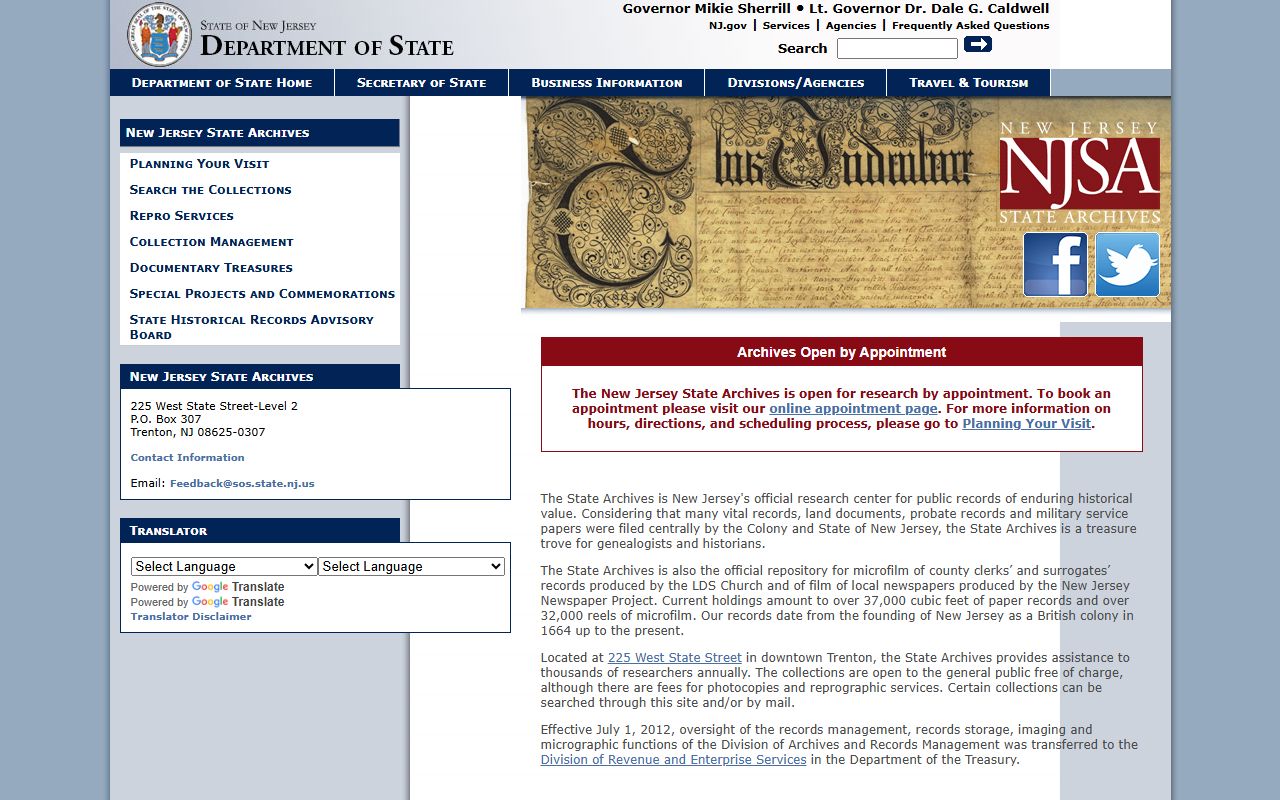
The New Jersey State Archives at 225 West State Street in Trenton holds older death records. Their search room has microfilm copies of death records from 1848 through 1963. The Archives also keeps county birth and burial records, probate files, and municipal vital records. Holdings amount to over 37,000 cubic feet of paper and more than 32,000 reels of microfilm. Databases index over 1.5 million documents and photographs in the collection. Research visits are by appointment, and the collections are free to use. Fees apply only for copies and reprographic work.
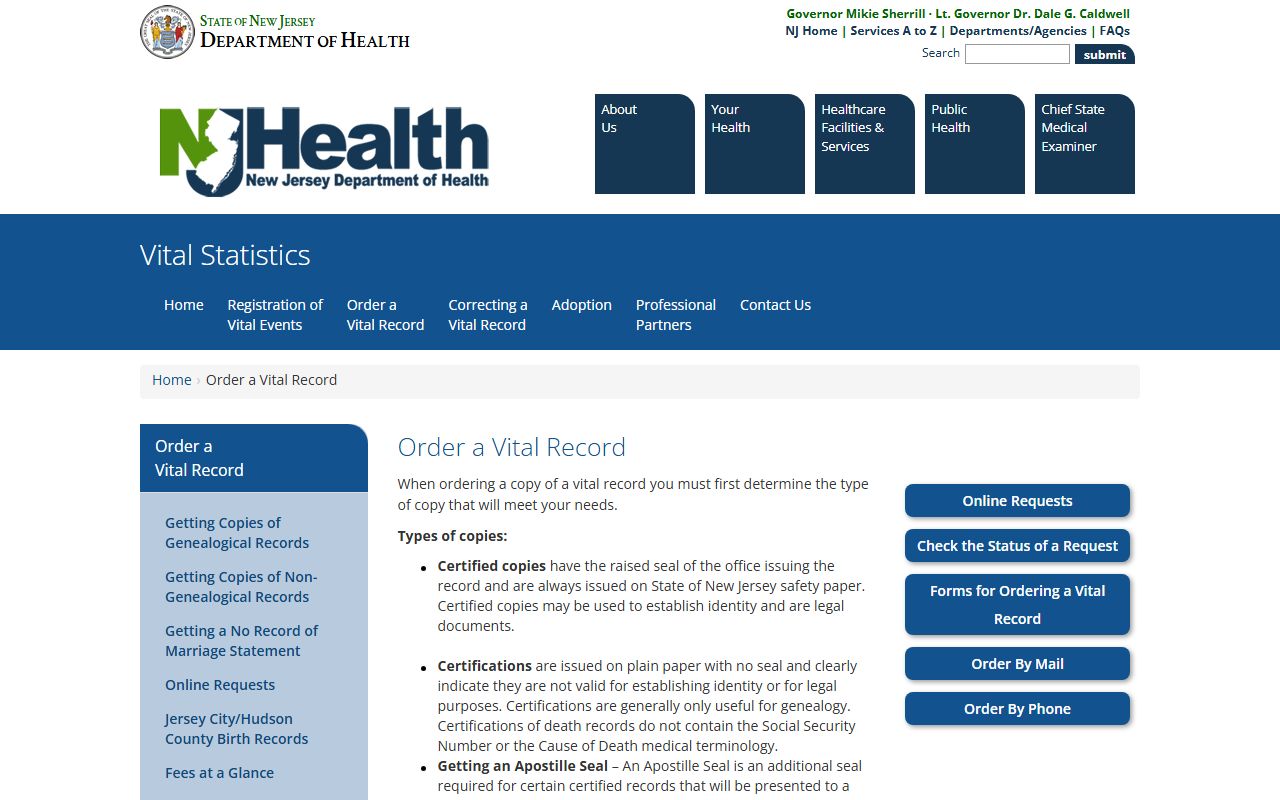
The vital records ordering page from the Department of Health explains how to request copies of death certificates through the state. You can order online, by mail, or in person at the Trenton walk-in center for New Jersey obituary records.
Note: New Jersey law restricts vital records. Death certificates are not public records and cannot be searched online through the state system.
Search the New Jersey Death Index
The New Jersey Death Index is a free database run by Reclaim The Records. It holds 1,275,833 death records from 2001 through 2017. The site also has over 500,000 digitized images of the death index for 1901 to 1903, 1920 to 1929, and 1949 to 2000. All search fields are optional. You only need to fill in what you know.
The search tool finds spelling variants on its own. A search for Chang also shows Zhang and Chan. A search for Bill also pulls up William and Billy. Wildcard searches work with an asterisk. For example, *berg matches Greenberg and Eisenberg. You can place the wildcard at the start, middle, or end of a name to find partial matches in New Jersey death records.

Records from different years show different details. The 1949 to 1967 entries give only the month and year of death plus numeric codes for place. Starting in 1968, the exact date of death appears. From 1979 on, you get the age at death and Social Security Number. After 1985, the county and town are spelled out and the full date of birth is included. This index is not the death certificate itself. If you find a name of interest, you can then order the full certificate from the state, which has much more detail including parents' names, spouse name, and burial location.
Types of New Jersey Death Records
New Jersey issues two types of death record copies. Certified copies carry the raised seal of the issuing office and are printed on state safety paper with security features. These are the only copies valid for legal use. You need a certified copy to probate a will, claim life insurance, transfer property, or settle estate matters in New Jersey. Only eligible family members, legal representatives, and authorized agencies can get certified copies.
Certifications are the second type. These are genealogy copies printed on plain paper with no seal. They clearly state they are not valid for establishing identity or legal purposes. Importantly, certification copies of New Jersey death records do not include the Social Security Number or the cause of death. They are useful for family history research when you do not need a legal document.
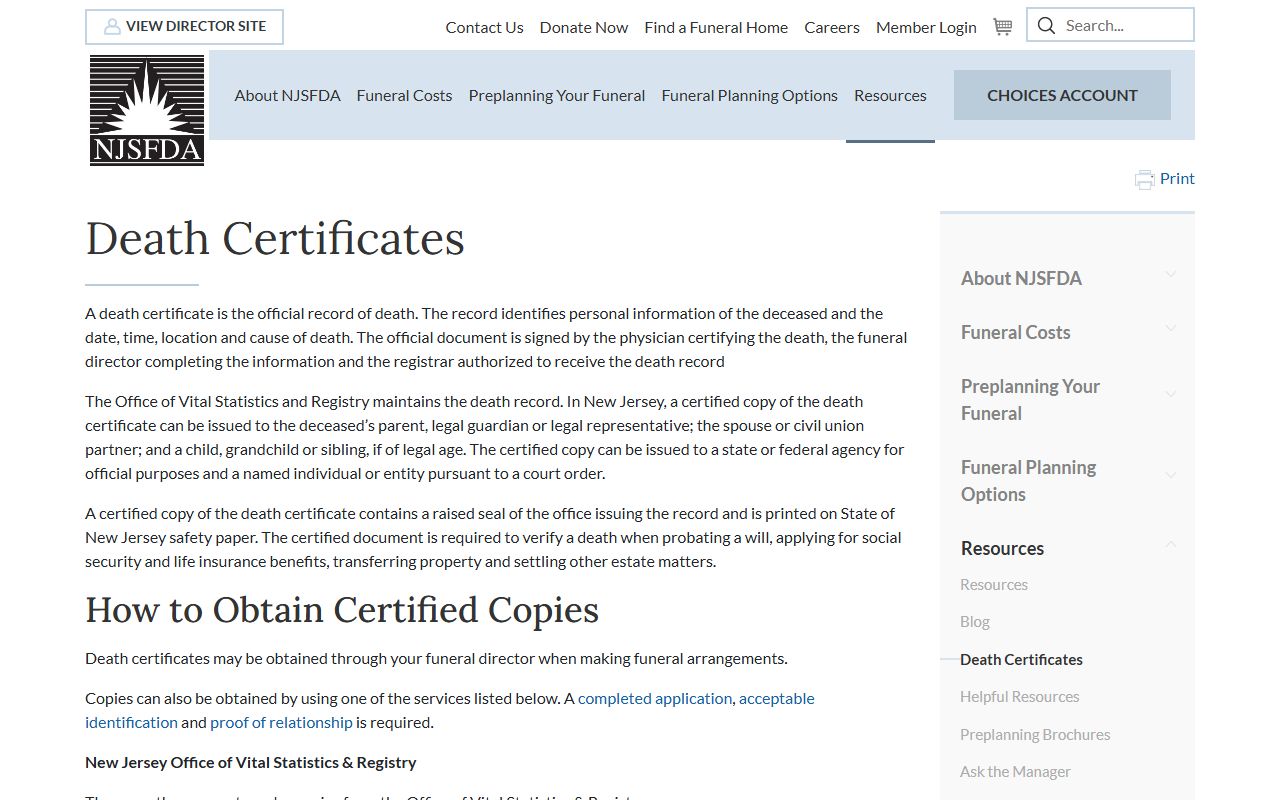
The New Jersey Funeral Directors Association explains that a death certificate is the official record of death. It lists personal details of the deceased along with the date, time, location, and cause of death. The document is signed by the certifying physician, the funeral director, and the local registrar. You can get certified copies through your funeral director when making arrangements, through the state office, or from the local municipal registrar where the death took place.
New Jersey Obituary Records for Genealogy
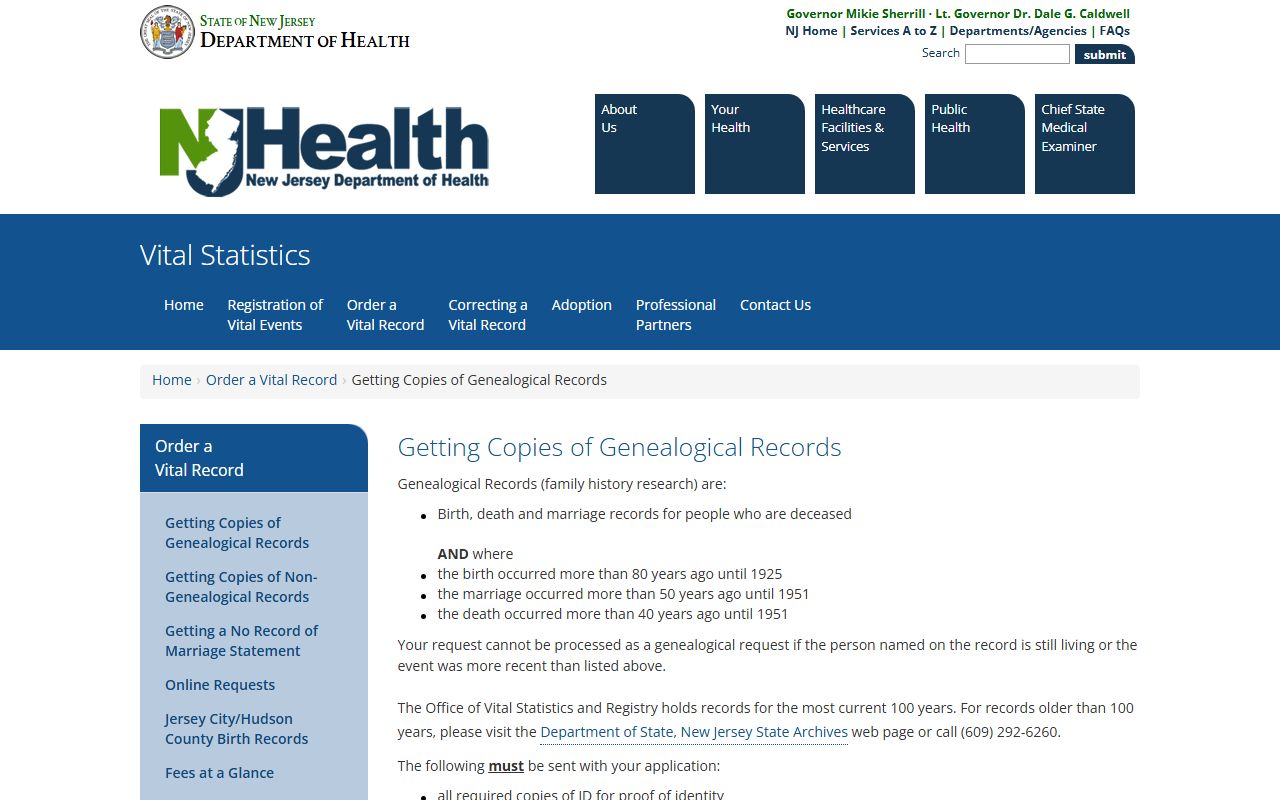
Genealogical death records follow special rules in New Jersey. Under state guidelines, a death record qualifies as genealogical if the person is deceased and the death occurred more than 40 years ago, up to 1951. For records older than 100 years, you must visit the State Archives rather than the Office of Vital Statistics. The Archives maintains microfilm of death records from 1848 through 1963 in their search room, which is open Tuesday through Friday and Saturdays from 9 AM to 4 PM.
Ordering a genealogy copy by mail requires a completed application, copies of your ID, and the correct fees. The Office of Vital Statistics charges $25 for the first copy and $2 for each extra copy of the same record ordered at the same time. For genealogical requests, extra years can be searched at $1 per year. Extra names or counties cost $25 each. Mail requests take 10 to 12 weeks to process, not counting delivery time. Send a check or money order to the Treasurer, State of New Jersey. Credit cards are not accepted by mail.
New Jersey State Archives Death Records
The State Archives genealogical holdings include microfilm of death records from 1848 to 1963. They also hold marriage records from 1848 to 1948 and birth records from 1848 to 1923. Searchable indexes cover marriage records from 1666 to 1799 and death records from 1848 to 1900. Colonial marriage bonds and licenses are available through the Secretary of State records.
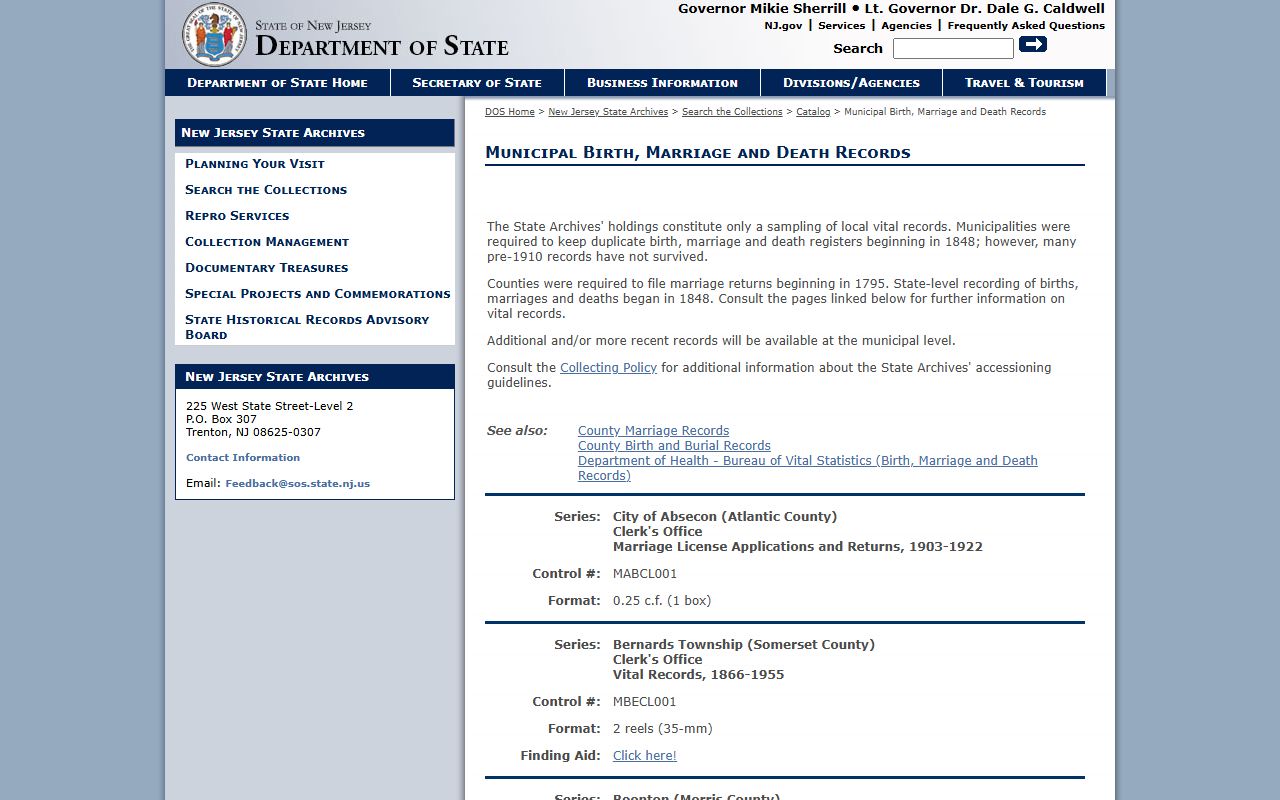
The Archives also keeps municipal vital records from towns across New Jersey. State-level recording of births, marriages, and deaths began in 1848. Municipalities were required to keep duplicate registers starting that year, though many pre-1910 records were lost to fires and floods. The Archives' holdings are only a sample of what existed. More complete records may still be at the local municipal level.
Probate records at the Archives provide another path to find death-related information. The surrogate court records from all 21 counties include wills, estate inventories, guardianship papers, and letters of administration. These files often list family relationships, property, and financial details about the deceased. The Archives also holds military records with veteran grave registrations from multiple counties.
Note: The State Archives accepts credit cards for payments and provides reference help to thousands of researchers each year.
Apostille for New Jersey Death Records
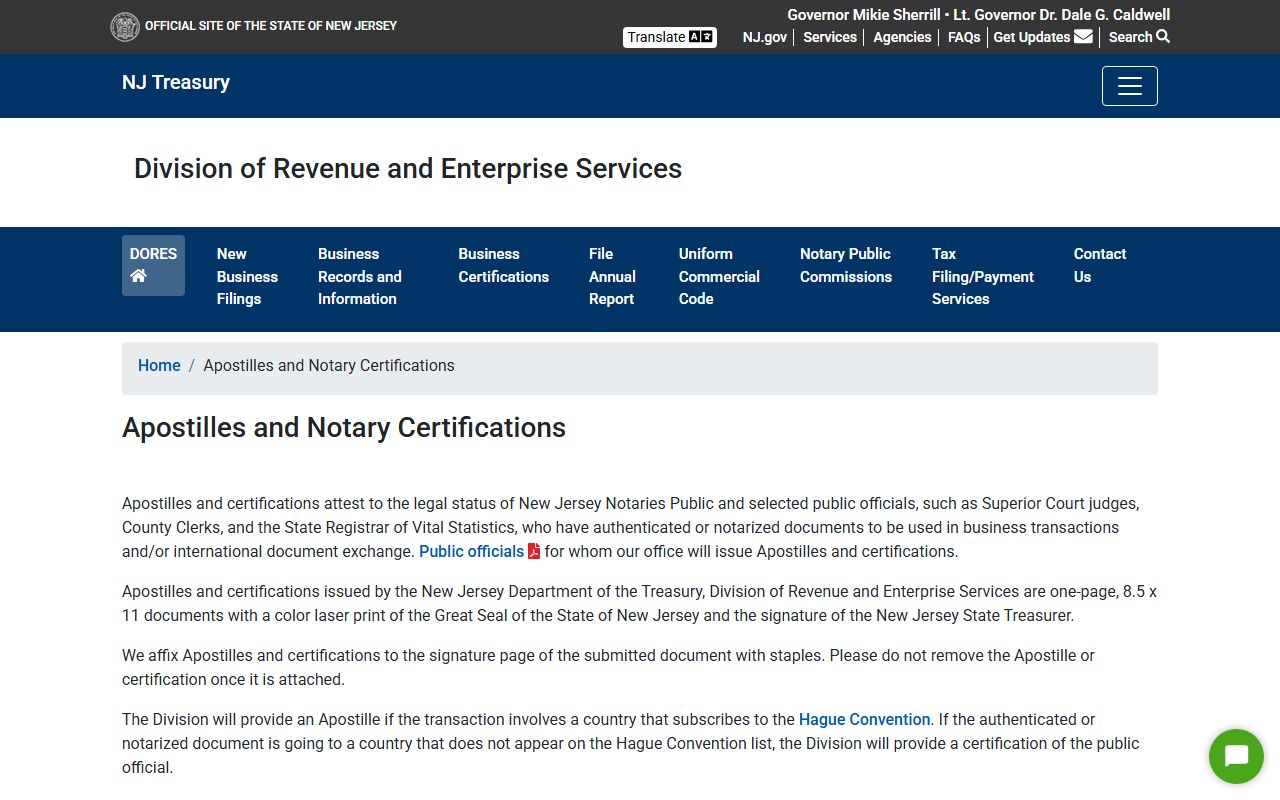
If you need a New Jersey death certificate for use in another country, you may need an apostille seal. The New Jersey Department of Treasury issues apostilles for documents that will go to countries in the Hague Convention. First, get a certified copy from the Office of Vital Statistics with the original signature of the State Registrar. Then send it to the Treasury for the apostille. The seal attests to the legal authority of the official who signed the document.
For countries not in the Hague Convention, the Treasury issues a certification instead. The Division cannot issue apostilles for vital records from other states. Contact the consulate of the receiving country to find out if you need an apostille for your New Jersey obituary death record.
Historical Obituary Records in New Jersey
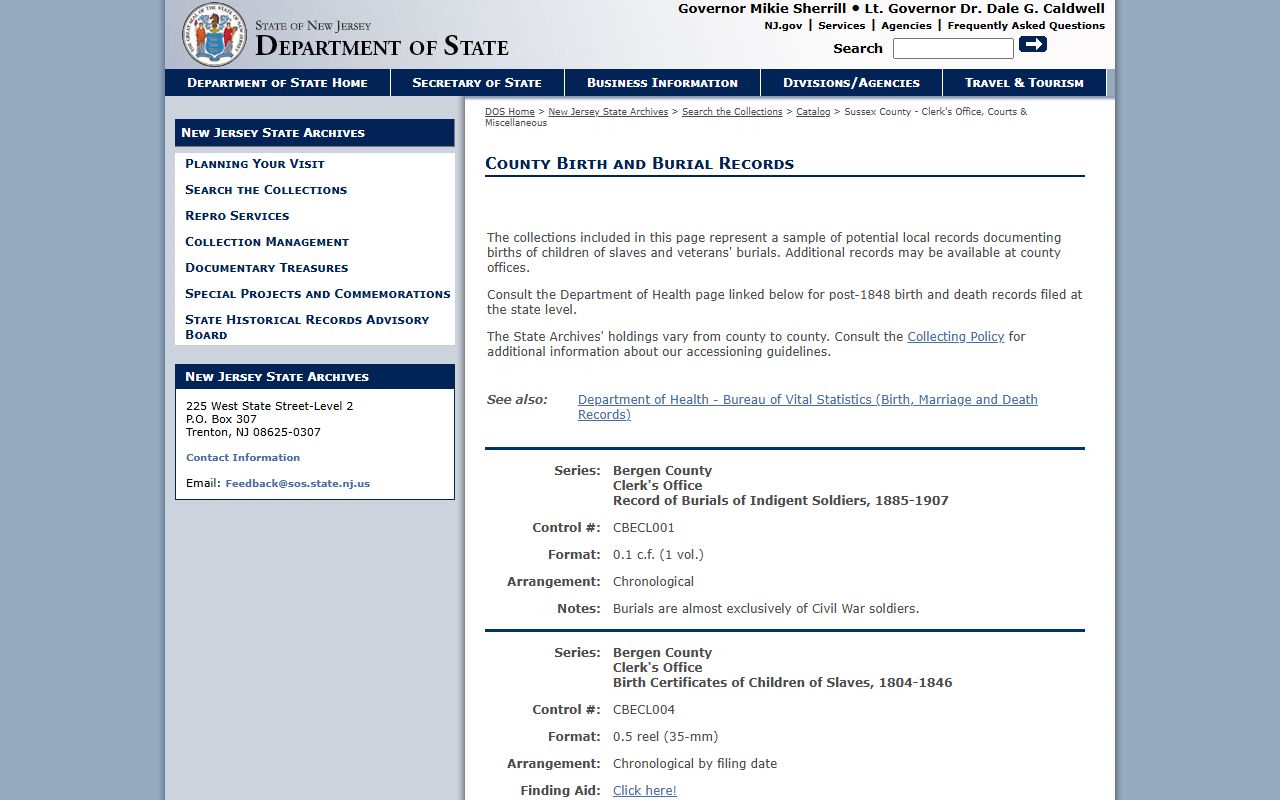
New Jersey has a long history of vital records. The state began recording deaths in 1848. Many early records survive on microfilm at the State Archives. The birth certificates of children of slaves collection at the Archives dates from 1801 to 1835, showing how early some records go. Sussex County records cover 1806 to 1821. Union County holds physician death certificates from 1874 to 1884.
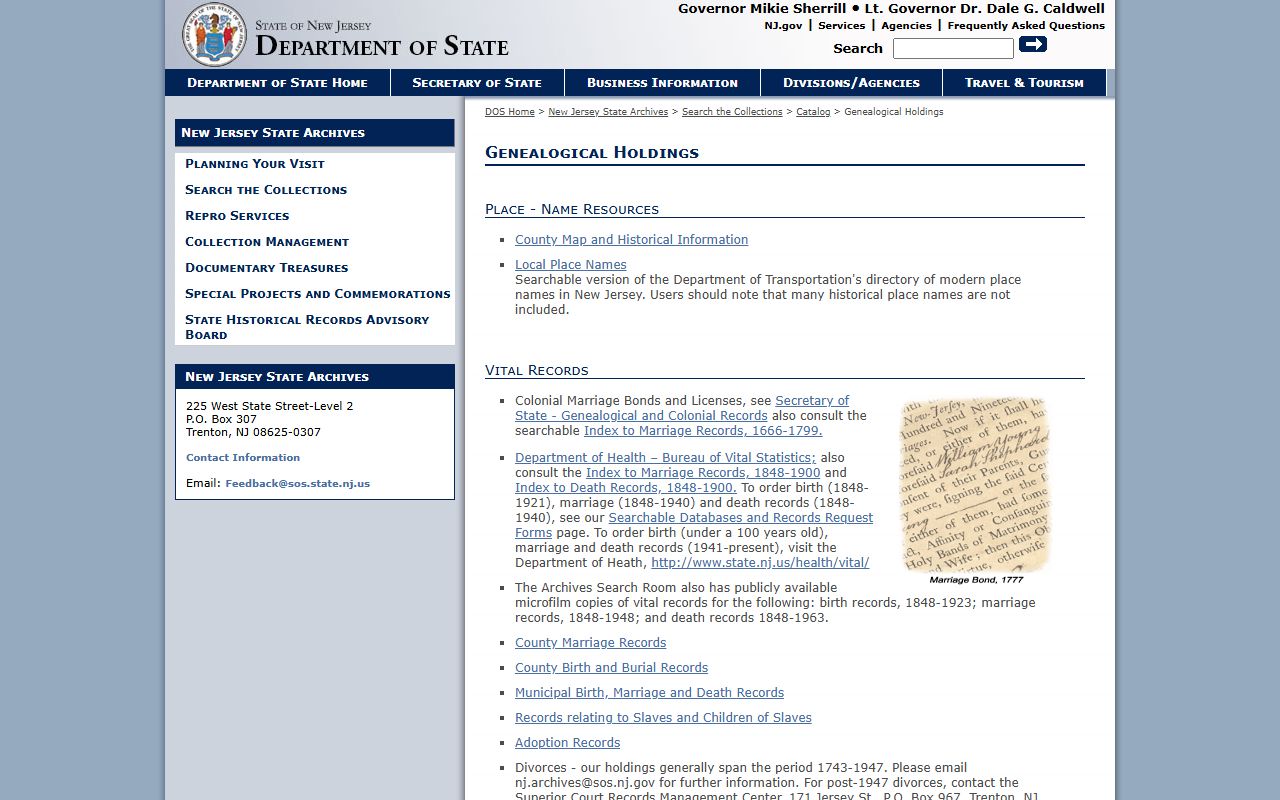
The genealogical holdings page lists all record types at the Archives. These include census records, tax ratables, land records, and adoption records with specific access rules. Divorce records at the Archives span 1743 to 1947. For later records, contact the Superior Court Records Management Center at 171 Jersey St., Trenton, NJ 08625, or call 609-777-0092.
Obituary Records Access by County
Each of New Jersey's 21 counties has local offices that keep records useful for obituary research. County clerks maintain land records and property documents that show estate transfers after a death. County surrogates handle probate, including wills, estate inventories, and guardianship records. Municipal registrars in each town issue death certificates for deaths that happened in their area.
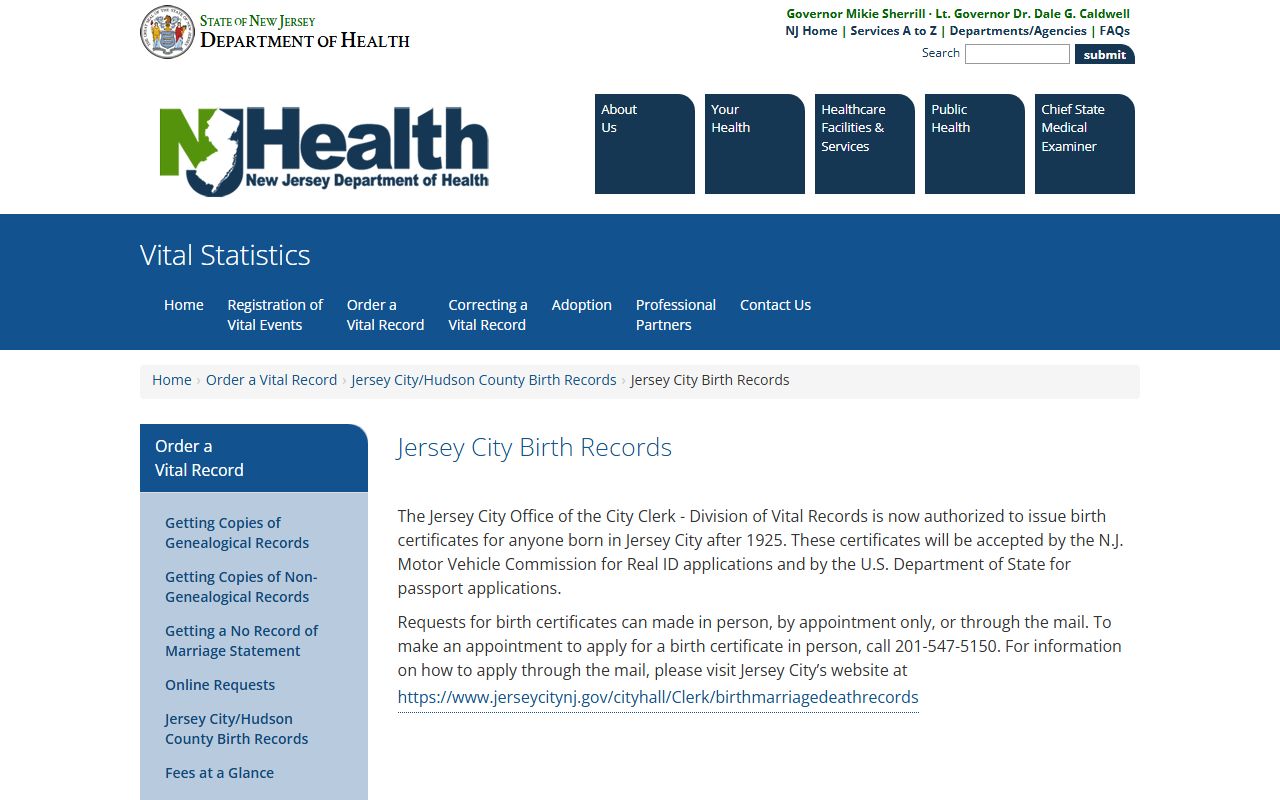
Some counties have special access points. The Jersey City Office of the City Clerk is now authorized to issue birth certificates for anyone born in Jersey City after 1925. These are accepted by the NJ Motor Vehicle Commission for Real ID and by the U.S. Department of State for passports. County libraries across New Jersey also hold historical newspapers with obituary notices, and many provide access to databases like Ancestry Library Edition and HeritageQuest for finding death and obituary information.
Military Death Records in New Jersey
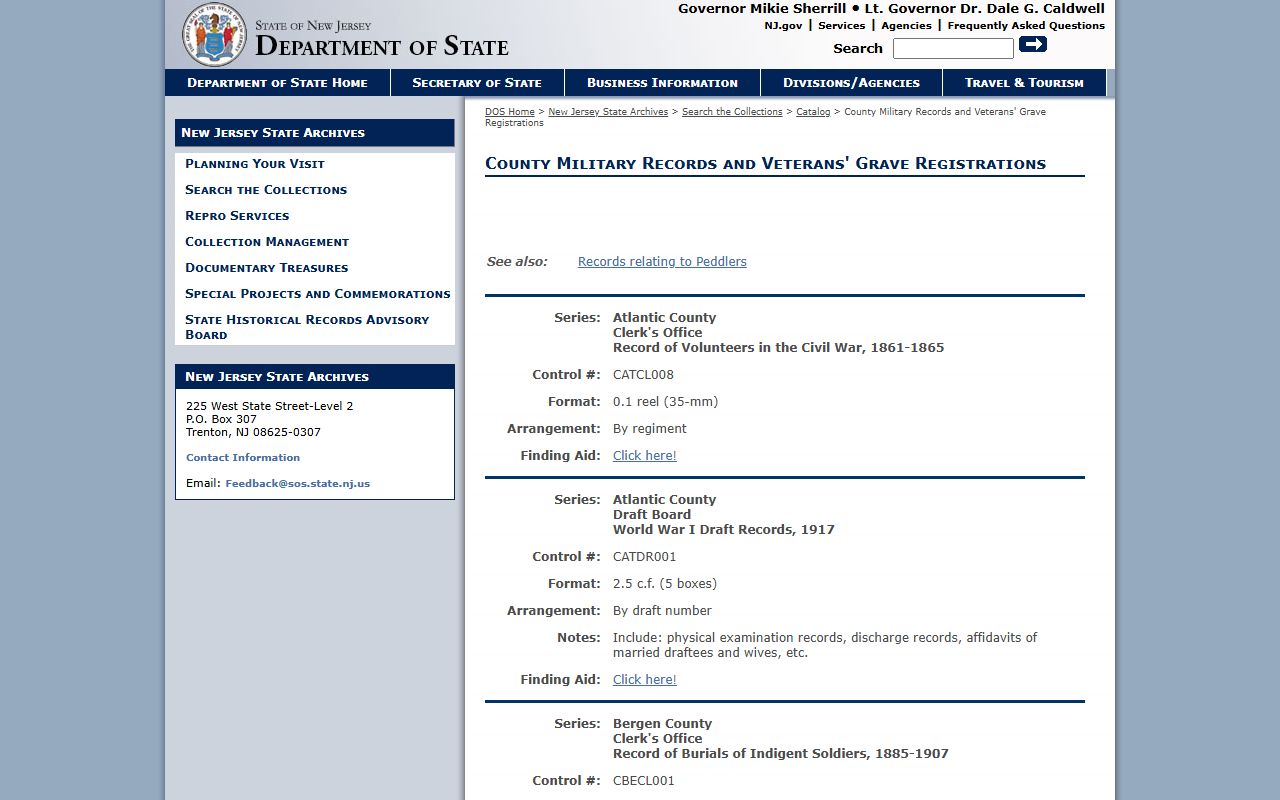
The State Archives holds military records from several New Jersey counties. Monmouth County has veteran grave registrations from 1775 to 1980. Salem County holds military records from 1860 to 1940 including veteran grave data. Middlesex County has Civil War records and veteran grave reports from 1790 to 1940. Passaic County keeps Civil War records and exempt firemen's certificates from the 1860s to 1935. These records connect military service to death and burial information for New Jersey veterans.
The funeral directors association notes that families can obtain death certificates through the funeral director at the time of arrangements. This is often the simplest path. The funeral director works directly with the local registrar to file the death record and can order certified copies on behalf of the family in New Jersey.
Browse New Jersey Obituary Records by County
Each county in New Jersey keeps death records through local registrars, surrogates, and clerks. Pick a county below to find local resources for obituary and death records.
Obituary Records in Major New Jersey Cities
Residents of cities across New Jersey can search for obituary and death records through their local municipal registrar and county offices. Pick a city to find resources.